
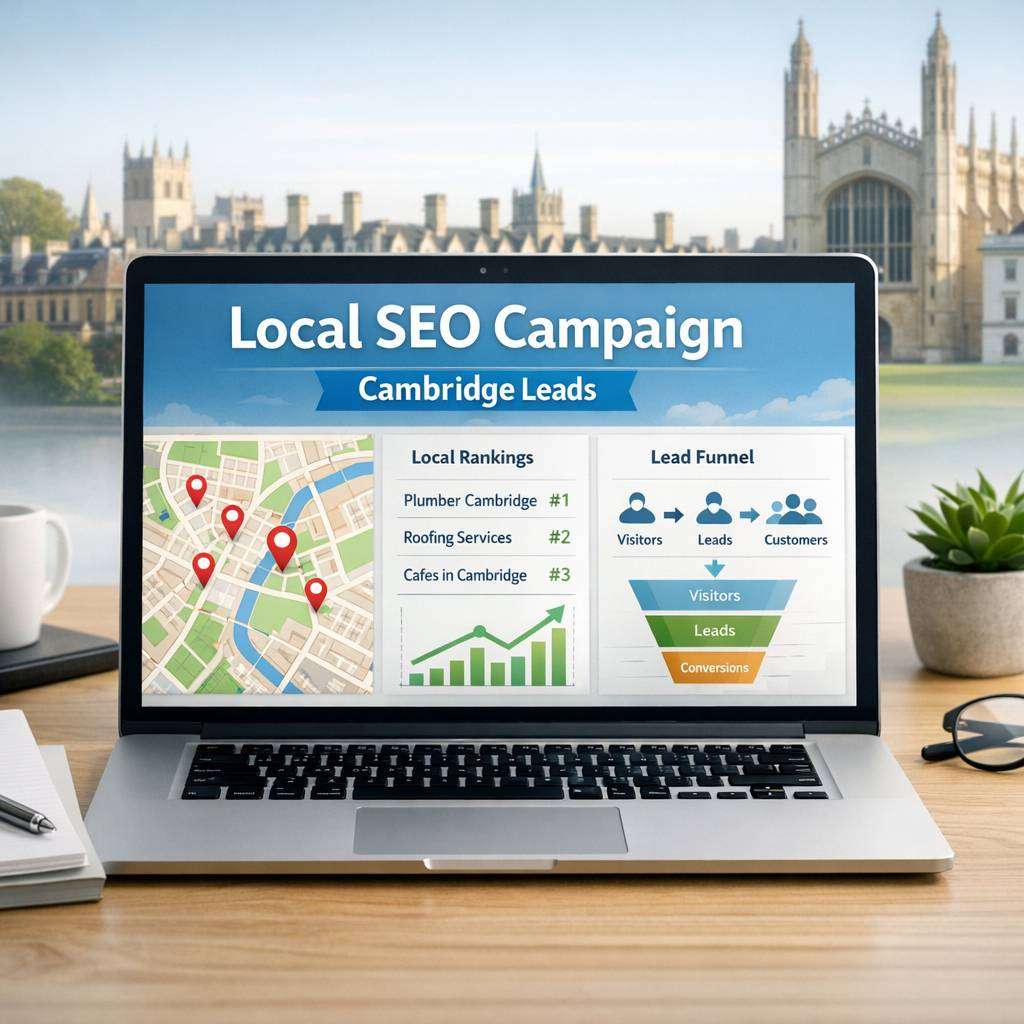
In today’s competitive local market, businesses in Cambridge cannot rely on generic, national SEO tactics alone. A tailored Cambridge SEO campaign that focuses on local intent, credible signals, and measurable outcomes is essential for generating high-quality local leads. By leveraging a thoughtful mix of on-page optimisation, authoritative local signals, and conversion-centric content, you can build sustained visibility in Cambridge and surrounding areas.
This article explores a practical, expert approach to constructing a Cambridge SEO campaign that consistently delivers qualified inquiries, bookings, and sales. Whether you are engaging a Cambridge SEO consultant or leveraging Cambridge SEO services in-house, the framework below translates to real-world results.
Before touching keywords or technical SEO, articulate what “local leads” means for your business and who your ideal customers are in Cambridge. Are you seeking phone calls, form submissions, reservations, or store visits? Map out buyer personas such as residents, commuters, or organisations seeking professional services. Align your objectives with a concrete lifecycle plan: awareness, consideration, conversion, and retention.
With clear goals, you can prioritise value-sensitive actions. For example, a Cambridge SEO consultant might prioritise high-intent keywords that capture nearly-ready-to-convert searches, while a local service business may place emphasis on service-area pages and NAP (Name, Address, Phone) consistency to boost trust and foot traffic.
A robust Cambridge SEO campaign starts with keyword research that blends local specificity with commercial intent. Beyond generic terms like “SEO Cambridge,” identify variations that signal intent such as “local SEO Cambridge,” “Cambridge SEO consultant near me,” or “hire Cambridge SEO services.” Include service-area pages for Cambridge and adjacent towns (e.g., Newmarket, Ely, Wisbech) to capture broader local demand.
Balance short-tail keywords with long-tail, question-based queries common in local searches, such as “how to boost Google rankings for Cambridge businesses” or “best Cambridge digital marketing agency for SMEs.” Use tools to assess search volume, competitiveness, and seasonal trends, but also consider the quality of SERP features in Cambridge (local packs, map results, and knowledge panels).
On-page optimisation should reflect the Cambridge locale at every touchpoint. Key steps include:
- NAP consistency: Ensure your business name, address, and phone number are uniform across the site and in external listings. Local citations reinforce trust signals to search engines.
- Local schema markup: Implement LocalBusiness schema, including Cambridge-based identifiers, hours, and a map, to enhance eligibility for rich results.
- Location-specific pages: Create dedicated Cambridge pages for each service line. Each page should include a clear service description, customer benefits, and a prominent CTA tailored to Cambridge prospects.
- Content localisation: Include phrases that resonate with Cambridge residents and businesses, such as references to the city’s business districts, universities, and local events where appropriate.
- Technical health: optimise site speed, mobile usability, and secure connections. A fast, accessible site improves user experience and reduces bounce from local visitors.
Content remains a cornerstone of Cambridge SEO. Focus on content that answers local questions, demonstrates expertise, and earns trust. Practical ideas include:
- Local case studies: Showcase Cambridge clients and results, with metrics where possible.
- Educational guides: Create posts about SEO best practices for Cambridge trades, hospitality, or professional services, tailored to the local market.
- Community content: Highlight partnerships with Cambridge organisations, sponsorships, or events to strengthen local relevance.
- Service demonstrations: Publish service explainers that address common Cambridge business challenges, including ROI projections and timelines.
Distribute content through a mix of formats—blog posts, videos, infographics, and downloadable resources—that align with user intent and your conversion goals. Pair every piece of content with a clear local call-to-action (CTA) and a link to relevant Cambridge service pages.
- Google Business Profile (GBP): Claim and optimise your GBP with accurate category selections, a detailed description, and regular posts featuring Cambridge-specific updates, offers, and events. Encourage satisfied Cambridge customers to leave reviews and respond professionally to feedback.
- Local citations: Build consistent NAP citations in Cambridge directories, business associations, and industry-specific listings. Prioritise authoritative local sources to bolster domain authority and trust signals.
- Reviews and reputation management: Proactively cultivate positive reviews from Cambridge clients. Implement a process to respond to reviews publicly, which reinforces engagement and transparency.
A technically sound site accelerates visibility and lead generation. Focus areas include:
- Structured navigation: A clear, user-centric site architecture helps Cambridge visitors find information quickly, improving engagement metrics that search engines monitor.
- Mobile experience: With many local searches conducted on mobile, ensure responsive design, tap-friendly CTAs, and accessible contact options.
- Core Web Vitals: optimise loading performance, interactivity, and visual stability to support rankings and user satisfaction.
- Localised internal linking: Use internal links to connect Cambridge service pages with relevant blog content, reinforcing topical authority and user journey continuity.
Earn high-quality backlinks from Cambridge-relevant sources to boost authority and ranking potential. Tactics include:
- Community engagement: Sponsor local events, participate in Cambridge business groups, and contribute guest content to regional outlets.
- Partnerships: Collaborate with Cambridge universities, tech hubs, and trade associations to produce co-authored content or case studies.
- Local press opportunities: Issue newsworthy updates about Cambridge projects, client successes, or community initiatives to gain regional coverage.
A Cambridge SEO campaign should be data-driven. Track metrics such as organic traffic from Cambridge, local keyword rankings, GBP views and actions, phone calls, form submissions, and conversion rate from landing pages. Use a weekly cadence for reviewing:
- Traffic and ranking shifts for Cambridge-specific keywords.
- Local engagement metrics (calls, clicks on GBP, direction requests).
- CPA and lead quality from Cambridge sources.
Regularly test and refine: update service pages, refresh blog content, optimise underperforming landing pages, and adjust bidding or budget allocations if you’re integrating paid media alongside organic efforts.
If you’re evaluating options such as a cambridge seo consultant, cambridge seo services, or an seo agency cambridge, look for a partner with:
- A track record of generating local leads in Cambridge or similar markets
- Transparent methodologies, clear reporting, and tangible milestones
- Experience across on-page optimisation, local signals, content strategy, and authority building
Partnering with a cambridge seo company or cambridge seo agency that understands local nuances can accelerate results, deliver more qualified leads, and align with long-term business growth. Local knowledge, paired with rigorous optimisation practices, is the formula that turns Cambridge searches into real-world customers.
Cambridge SEO strategies boost local visibility and drive targeted traffic. Elevate rankings with expert audits, on-page optimization, and credible backlink building. For trusted results, check this resource: https:///www.doublespark.co.uk to learn more.